Our story
Inspired by a place.
Made fresh for today.
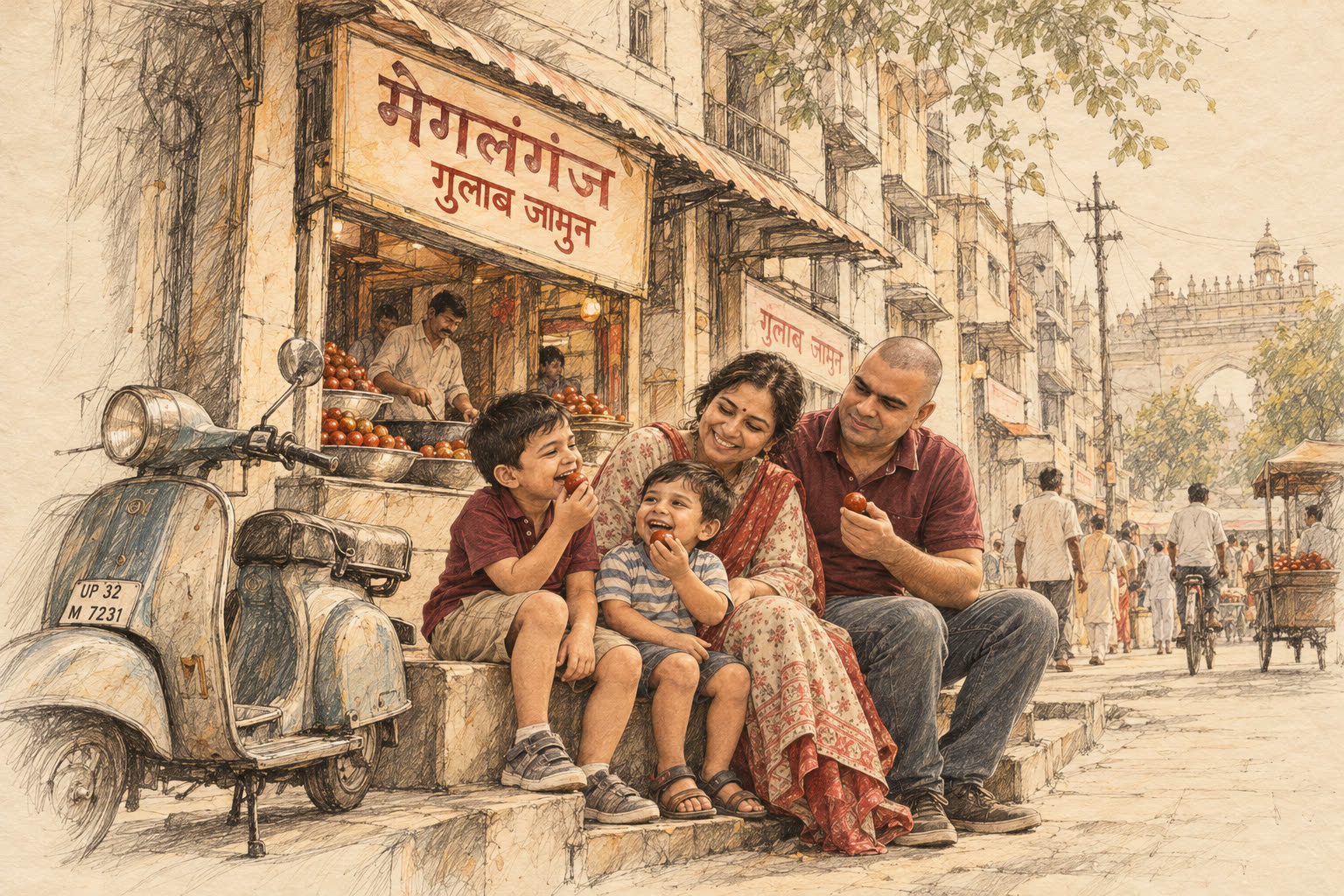
The story of Maigalganj
Some memories never leave you.
Some tastes never change.
There was a stretch of street in Maigalganj where almost every shop seemed to have one purpose: gulab jamun.
During our childhood, we crossed those streets so many times that stopping for gulab jamun became almost a ritual. It was hard to remember a time we passed through Maigalganj without having some. The sight of those shops, the warmth of freshly made gulab jamuns, and that unmistakable sweetness became part of our happiest memories.
We grew up, moved on, and life took us elsewhere. But some memories have a way of staying with you.
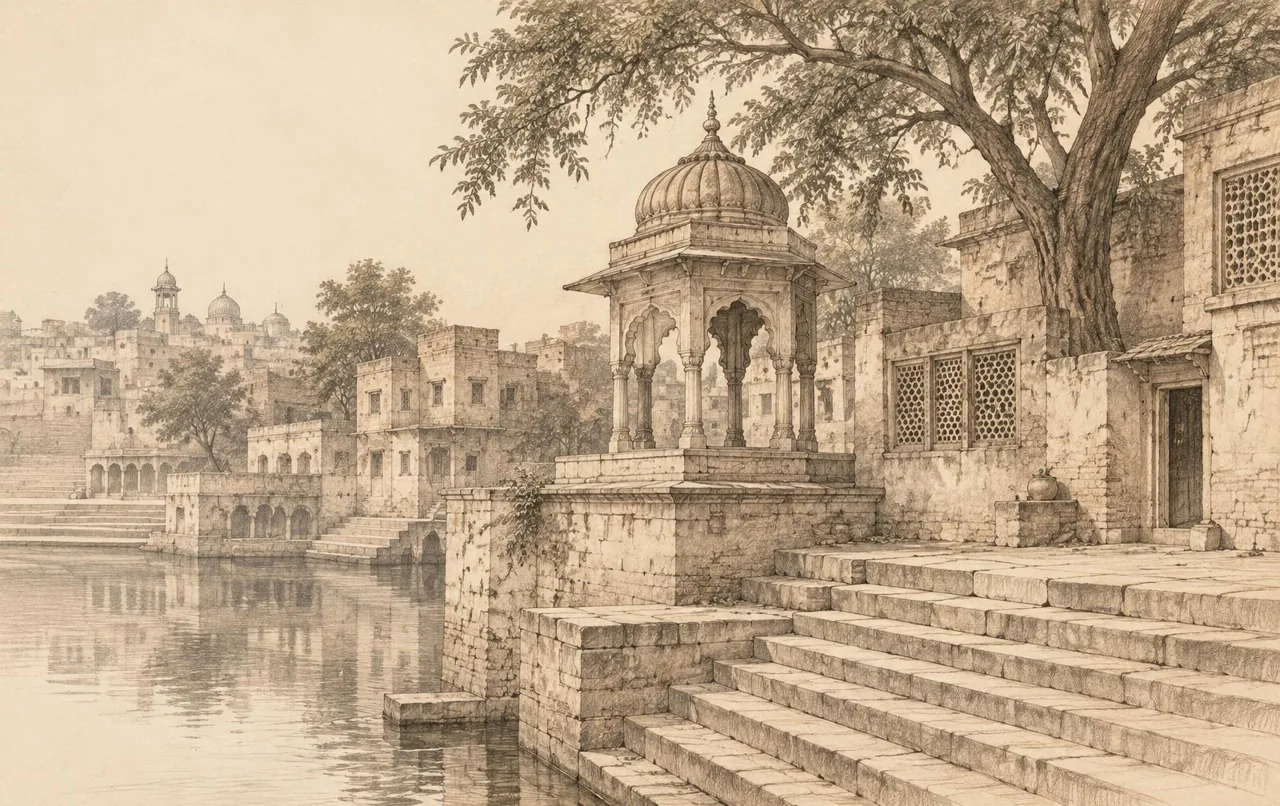
And that is where this story begins.
Maigalganj Gulab Jamun is our way of bringing a little piece of those memories to Bengaluru. Not to recreate the past with grand promises, but to share something we have genuinely loved for years.
We use real khoya, slow-fry our gulab jamuns in a blend of ghee and sunflower oil, and soak them in fragrant cardamom-and-rose syrup. We make one small batch a day, with care and the intention of keeping things honest.
There is no complicated story behind why we started. We simply have a taste we believe is worth sharing, a place we remember fondly, and a desire to bring that feeling to more people.
If our gulab jamun reminds you of a childhood sweet shop, a journey home, or a moment you wish you could revisit, then perhaps a little of our Maigalganj has found its way to you.
Made with love.
Shared with honest intentions.
Maigalganj Gulab Jamun
A place in the name. A tradition in every bite.
A short history
The sweet named for the rose.
The name
Rose and fruit
‘Gulab’ comes from the Persian for rose water — gul (flower) and āb (water). ‘Jamun’ is the small, dark Indian fruit the finished sweets resemble in size and colour.
Roots
A family of fried, syrup-soaked sweets
Food historians link gulab jamun to fried dough sweets soaked in syrup from Persia and the wider Middle East, such as luqmat al-qadi. The technique travelled along trade and cultural routes into the subcontinent.
Mughal India
Made with milk
It is widely believed the sweet took its present form in medieval India, often associated with the Mughal court. The Indian innovation was khoya — milk slowly reduced to soft solids — giving a richness no flour dough could match.
Legend
A royal kitchen tale
A popular story credits a cook in Emperor Shah Jahan's kitchen with creating it by accident. It's a charming tale, but it's legend rather than recorded history.
Today
The sweet of every celebration
Gulab jamun is now made across India, Pakistan, Bangladesh and Nepal — for weddings, Diwali, Eid and everyday evenings. Regional cousins include Bengal's darker kalo jaam and Rajasthan's gulab jamun ki sabzi.
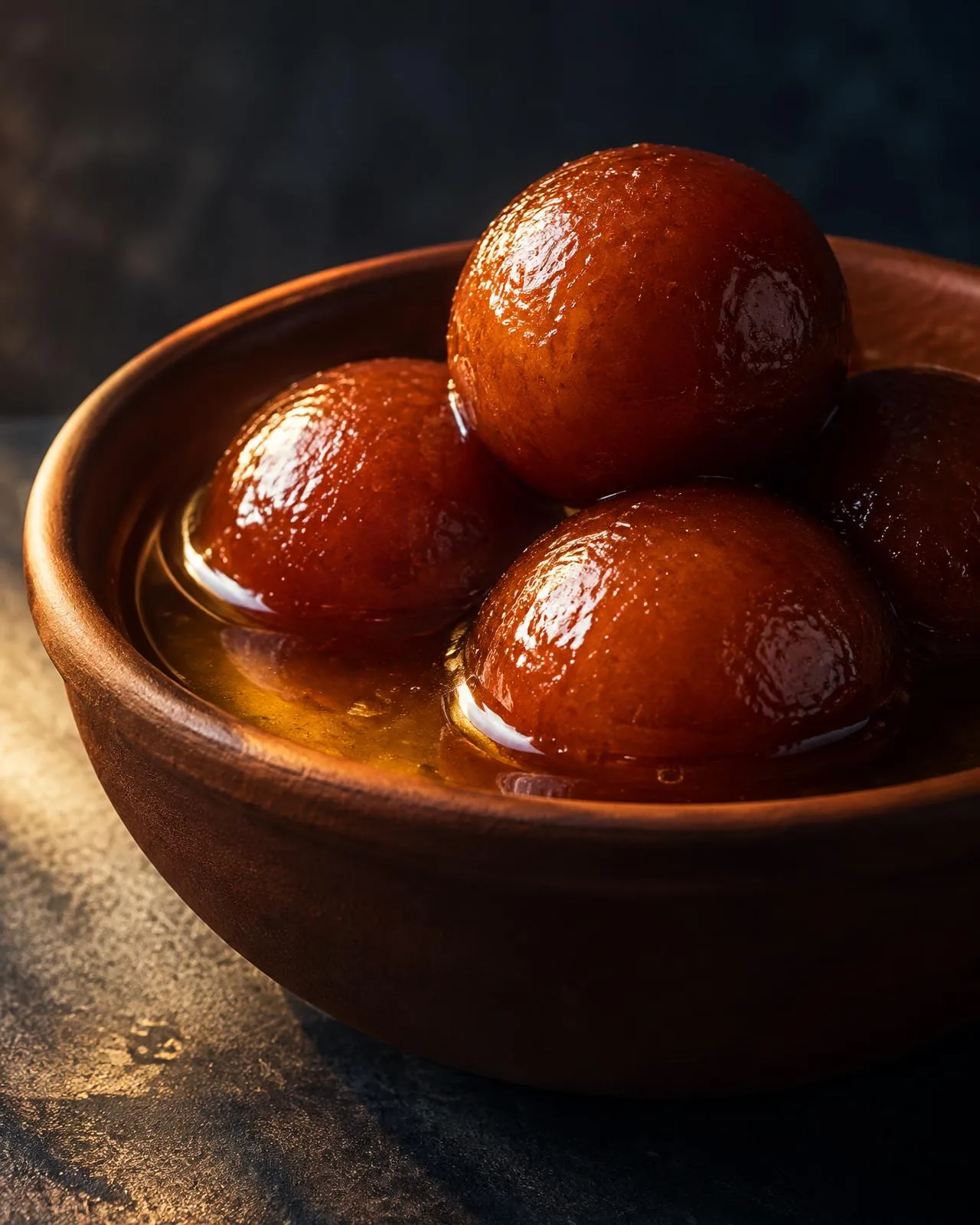
Old recipe. Today's batch.
Order gulab jamun